
Understanding the Warning Signs
A slab leak does not always present the same way. Looking at several symptoms together can provide more useful information than relying on a single sign.
Your Water Usage Has Changed
If your normal household routine has stayed the same but water consumption has increased, a hidden plumbing leak may be one possible cause.
There Is a Persistent Sound of Water
Water movement, hissing, or other unusual sounds from beneath floors or walls can indicate that water is escaping from a concealed section of plumbing.
A Section of Flooring Feels Warm
A warm area on the floor can sometimes occur above a leaking hot-water line. Thermal differences can be investigated to determine whether they are related to a plumbing issue.
Moisture Appears Without a Visible Leak
Damp flooring, unexplained moisture, or changes to flooring materials can be reasons to investigate for a concealed water source.
Why a Slab Leak Can Be Difficult to Pinpoint
Concrete hides the plumbing beneath it, so the affected pipe cannot normally be examined through a simple visual inspection. The point where water becomes noticeable may also differ from the actual location of the damaged pipe.
For this reason, leak detection involves gathering information from the plumbing system and using specialized methods to narrow down the suspected source.
What Is Involved in Slab Leak Detection?
The investigation can involve several forms of testing. Which methods are appropriate depends on the plumbing layout, symptoms, and characteristics of the suspected leak.
Plumbing Pressure Testing
A pressure test can help determine whether a pressurized water line is maintaining pressure. Unexpected pressure loss can indicate that further investigation is needed.
Acoustic Leak Location
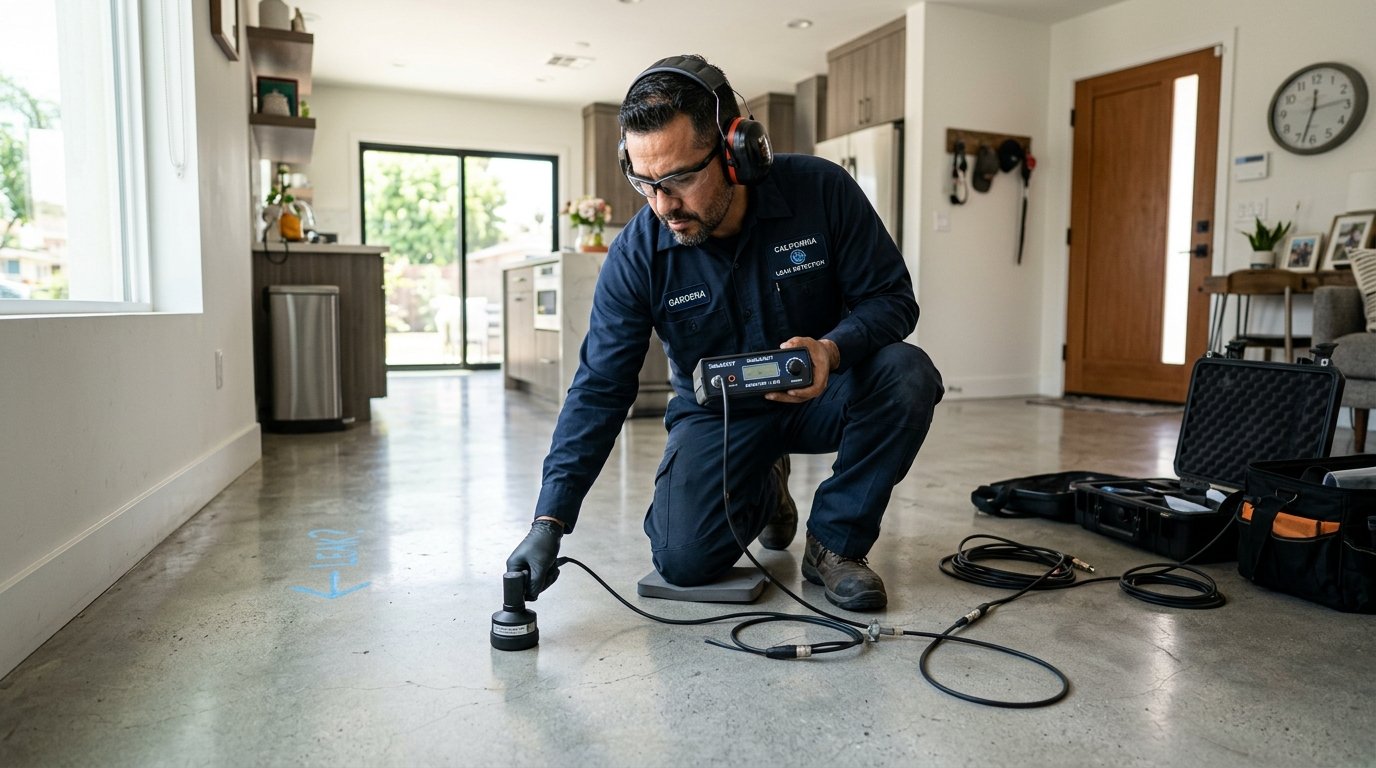
Escaping water can create detectable sound patterns. Acoustic equipment can help identify these sounds and narrow the area where a leak may be occurring.
Thermal Imaging
Thermal imaging can show temperature differences across flooring and other surfaces. This can provide useful information when investigating a suspected hot-water-line leak.
Electronic Detection
Electronic leak detection can supplement other testing methods when the suspected source is concealed beneath concrete and cannot be directly inspected.
Factors That Can Contribute to a Slab Leak
A leak beneath a slab can develop for different reasons. The exact cause should be established from the plumbing condition rather than assumed from the symptoms.
Deteriorating Plumbing
Water lines can develop weakened sections as they age or deteriorate, eventually allowing water to escape.
Corrosion and Pinhole Openings
Corrosion can result in small openings within a pipe. A small opening can still cause ongoing water loss when the line is under pressure.
Pipe or Connection Damage
A damaged pipe section, fitting, or connection beneath the slab can also become a source of hidden water loss.
How to Find a Leak Beneath a Concrete Slab
When investigating a possible slab leak, the visible symptom should not automatically be treated as the source. Water can move through surrounding materials before becoming noticeable.
A more focused investigation can begin by checking water usage and plumbing pressure, followed by acoustic, thermal, or electronic detection as appropriate. Combining these findings can help narrow down the suspected location.
This approach can help answer how to find a leak under concrete without immediately removing large sections of flooring.
Can Slab Leak Detection Be Done Before Concrete Removal?
In many situations, yes. Specialized detection methods can be used to investigate a suspected leak before cutting into or removing concrete.
Pressure testing can help establish whether a pressurized line is affected, while acoustic, thermal, and electronic methods can provide information about the possible location.
The results depend on the plumbing configuration and leak conditions, so no single method should be expected to locate every concealed leak.
Slab Leak Detection in Redondo Beach ZIP Codes
Slab leak detection services can cover properties throughout Redondo Beach, including addresses associated with ZIP code 90277 and ZIP code 90278. Los Angeles County records identify both ZIP codes with the City of Redondo Beach, although portions of these postal areas also overlap with other jurisdictions.
Providing the complete property address can help confirm the service location when scheduling a slab leak investigation.
Our Specialized Services & Nearby Cities
We provide complete non-destructive diagnostics: read about Concrete Slab Leak Detection → and Under-Slab Leak Detection →.
What Happens Once a Possible Leak Is Located?
Detection provides information that can help determine what should happen next.
Establish the Suspected Leak Area
The testing results can be used to narrow down the portion of the plumbing system associated with the suspected water loss.
Determine Whether Further Access Is Needed
A more specific location can help identify where additional inspection or access may be appropriate instead of disturbing a larger area unnecessarily.
Consider the Appropriate Repair
If a leaking water line beneath the slab is confirmed, slab leak repair in Redondo Beach, CA may be considered. The appropriate repair method depends on the affected plumbing and the detection findings.
Why Start With Leak Detection?
A suspected leak beneath concrete should not have to be located by guesswork. Detection can provide useful information about whether a concealed water line is involved and where the suspected problem is concentrated.
Identifying the area before concrete removal can also help guide decisions about the next stage of the plumbing work.
Schedule Slab Leak Detection in Redondo Beach, CA
If you have noticed unexplained water usage, unusual sounds, warm flooring, or moisture without an obvious source, the plumbing beneath the slab may need further investigation.
Contact us to schedule slab leak detection in Redondo Beach, CA and determine whether a concealed water leak may be affecting the property. Read about our team on our About page or Contact Us directly.
Call +1 (424) 402-3144